
Like the core in a dandelion flower
Chus Martínez on art, fear, and the work of institutions
a conversation
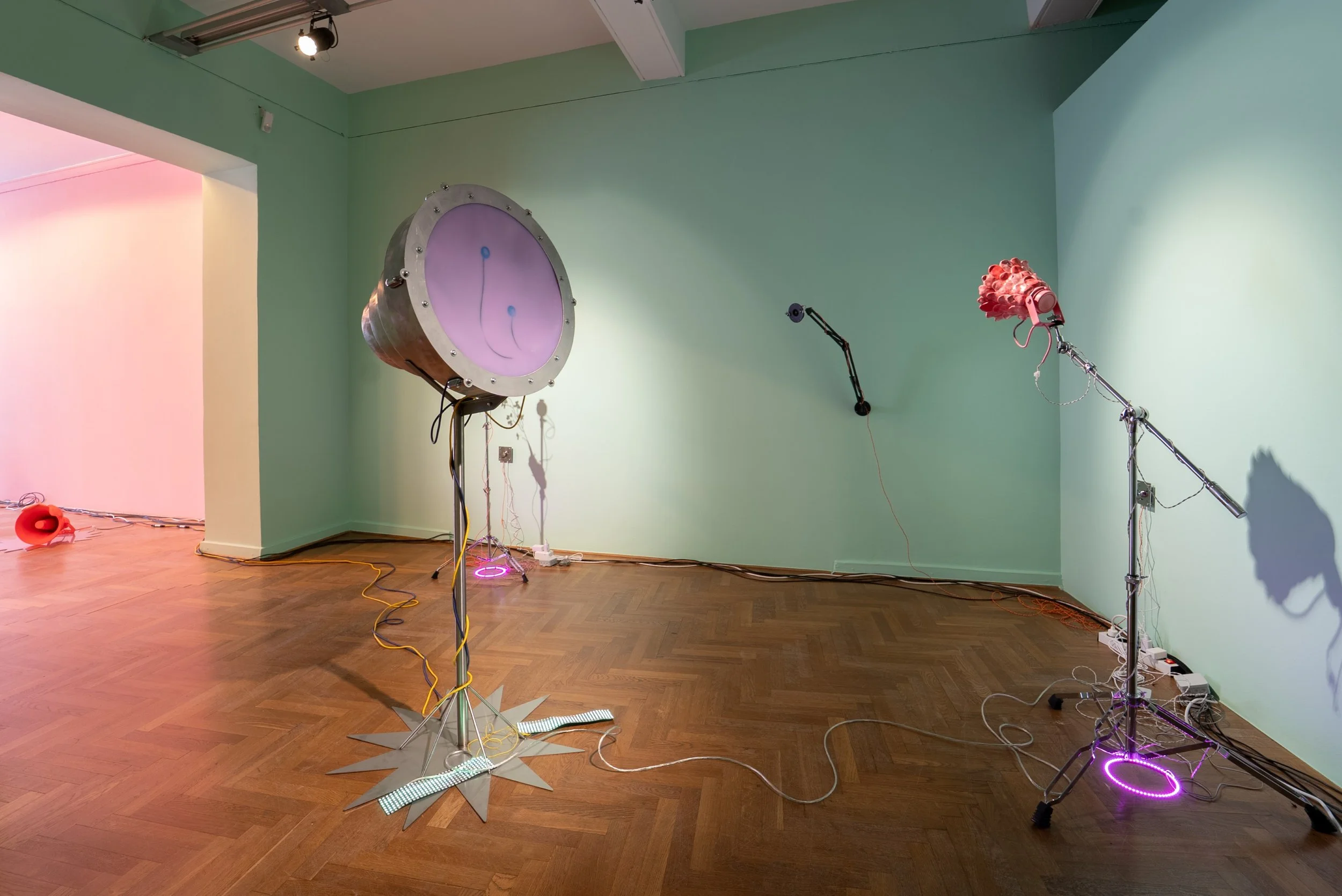
The 36th Ljubljana Biennale of Graphic Arts, City Art Gallery Ljubljana, Nicole L’Huillier, Rehearsal Room, 2025. Photo: Gregor Gobec. MGLC Archive.Chus Martínez is a curator, writer, and educator whose work has consistently challenged inherited models of knowledge production in art and its institutions. Based in Basel, she is Head of the Institute Art Gender Nature (IAGN) at the FHNW Academy of Art and Design, where she leads an experimental pedagogical and research framework attentive to ecology, technology, gender, and alternative epistemologies. Across exhibitions, writing, and institutional practice, Martínez has developed a sustained inquiry into art as a cognitive force — one that does not merely represent ideas, but actively reshapes how knowledge is formed, transmitted, and lived.
Her curatorial practice has taken place internationally, including projects such as the 36th Ljubljana Biennale of Graphic Arts, as well as exhibitions and research platforms developed through the Institute Art Gender Nature (IAGN). Across these initiatives, she has worked closely with artists operating at the intersections of sound, computation, science, and speculative material practices. These projects foreground exhibition-making not as display but as a form of thinking — one capable of staging encounters between heterogeneous forms of knowledge without forcing their resolution.
Martínez’s book The Complex Answer: On Art as a Nonbinary Intelligence (Sternberg Press, 2023) brings together essays written over the past decade that articulate this position with particular urgency. Rejecting linear epistemologies and extractive models of critique, she proposes art as an intelligence capable of holding contradiction, uncertainty, and experiential thinking in productive tension. Rather than treating art as a supplementary or illustrative form of knowledge, The Complex Answer positions it as a connective force — one that enables transversal relations among different modes of knowing while resisting their closure into fixed systems.
In the conversation that follows, Martínez speaks with Chennie Huang about the limits of institutional critique, the misalignment between artistic practice and academic research paradigms, and the need to invent new spaces and institutions capable of sustaining alertness rather than fear. Drawing on figures such as Gaston Bachelard and Vilém Flusser, as well as her own experience in exhibition-making and education, she argues for practices that privilege transmission, attentiveness, and social imagination over certainty or control. At a moment marked by political volatility and a widespread retreat from complexity, Martínez insists on art’s capacity to resist simplification — not by offering reassurance, but by cultivating environments in which new forms of perception, alliance, and responsibility can emerge.
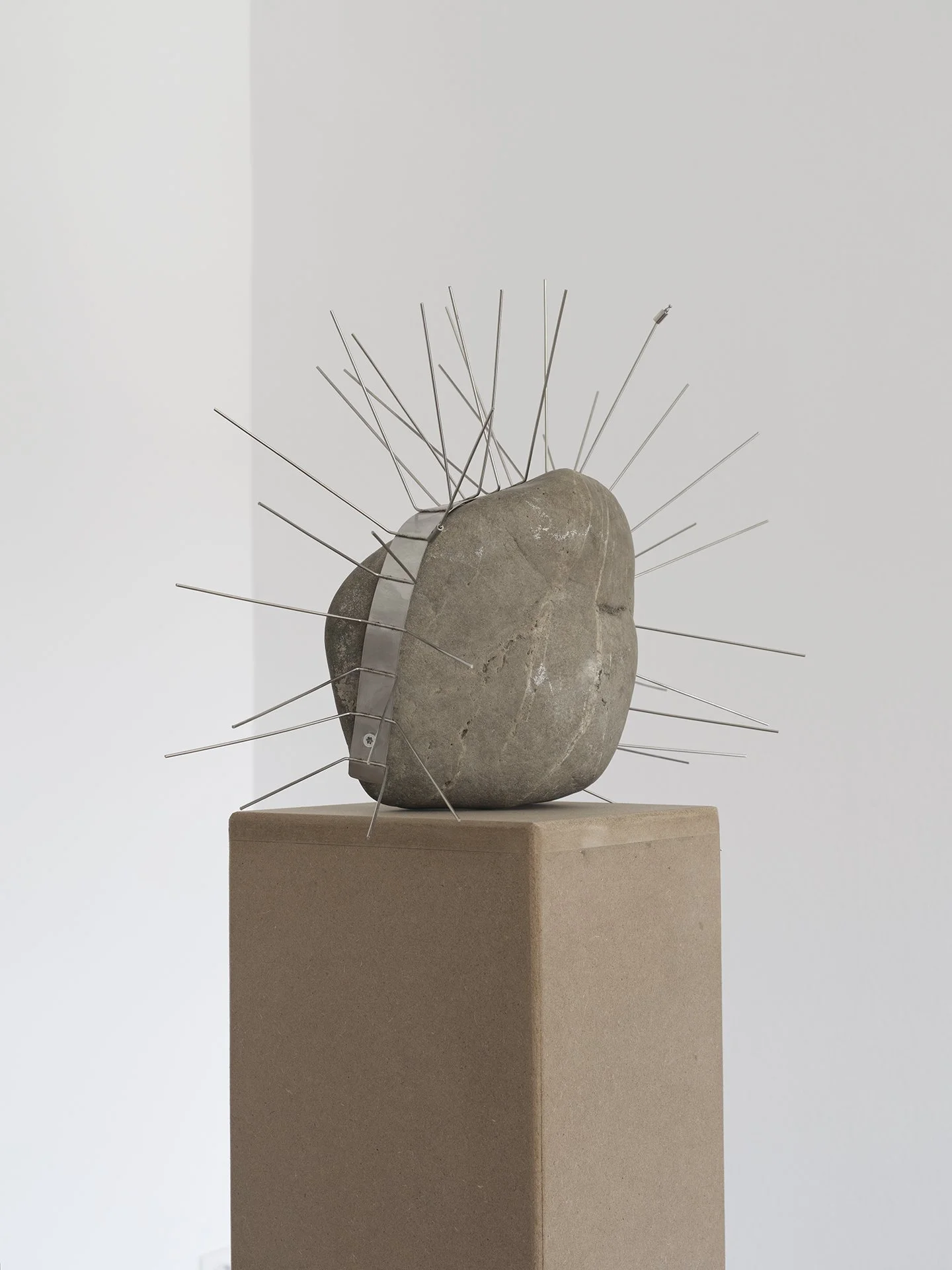
The 36th Ljubljana Biennale of Graphic Arts, MGLC Grad Tivoli, Manuela Morales Délano, Espantapájaro con ojo (Scarecrow with Eye), 2025. Photo: Jaka Babnik. MGLC Archive.Chennie Huang: In the preface of your book, you describe art as an intelligence influenced by ideas and the emergence of new notions but also thinking through experience. How do you distinguish this from the long tradition of aesthetic philosophy from Kant through Rancière that also positions art as a distinct form of knowledge?
Chus Martínez: Probably the short answer is that in the past art was understood as a particular form of knowledge, indeed, but not one that was central. In my view, the form of knowledges that art embodies is one that allows the complementarity among all the others. It embodies a free form –that is not different from Kant — difficult to define and describe but really essential and central. Like the core in a dandelion flower.
CH: Throughout the essay, “logic” appears alternately as something to be abandoned, critiqued, or reconfigured. How would you describe the kind of logic — or non-logic — at work in speculative exhibition-making?
CM: This is a very important but also difficult question. All forms have a logic, but not all logics are traceable the same way as we know from the quantum, for example. What I mean is that art, exhibition making, and the many different languages that are connected with it should aspire to exercise cognitive forms that defy inherited etymologies and genealogies. We are addressing this aspiration constantly, when we talk, for example, about indigenous knowledges. However, naming the wish is not the same as performing it, experimenting new methods of connecting experiences, ideas and complex thinking.
CH: You write that "meaning's meaning is unstable" and that historical or contextual reconstruction of a work cannot be equated with understanding. This raises a reflexive question: how do you approach the stability of your own theoretical claims? Is there a different register for writing about art than for art itself?
CM: Indeed! My own writing and thinking is in constant transformation. Now, that I feel a real difficulty to connect with audiences and to keep the trust of the citizens in art and culture, I constantly think of a writing that becomes orality. Can we write so that it becomes spoken word? Can we speak so that we will awake the desire to read? Exploring transmission in all its forms and seeing how we can propose a flow that enriches the life of the audiences and reduces the time they are giving to social media or streaming platforms.
“Humans are easy to scare and when they are —like now — they want to escape.”
CH: In “Clandestine Happiness: What Do We Mean by Artistic Research?” you draw beautifully on Bachelard's notion that poetic space operates where causality ceases, through "reverberation" rather than direct effect. At the same time, the writing makes strong claims about what art does — it produces osmosis between knowledges, it builds counterworlds. How do you think about the relationship between describing art's non-causal operations and making arguments about its effects?
CM: I actually wrote that article to open the possibility of abandoning that term all together. I dislike the notion of research – to begin with — it is too close to the idea of digging into a terrain and bringing the findings to the surface. It is co-dependent of a thinking that believes in extracting a truth from somewhere and exposing it to its judges. Pairing artistic thinking and doing with academic research is a mistake at many levels. I am under the impression that it equals relevant studies in cognitive processes with old-fashioned academic methods, methods that are dated. Art explores the many ways our senses and minds enter into the realm of the cognitive in a really complex manner, to subsume it to the academic ideal – one that is no longer alive — is sad and has very negative consequences.
CH: Bachelard's daydreaming is intimate, interior — you describe it as accessing "a sphere radically opposed to the domestic and different from the social." Yet you're interested in reshaping art institutions, which are unavoidably social structures. How do you hold those commitments together?
CM: I am really obsessed with finding ways of making art practices and – of course —institutional practices become eloquent and able to transmit states of attentions and awarenesses. At the time I wrote that essay I was fascinated by Bachelard’s trust in mental states that are so difficult to institutionalize. Awareness and the propagation of discourses that proclaim a mental state that is highly alert and awake are a problem. Humans are easy to scare and when they are — like now — they want to escape.
Acknowledging this desire to be in a limbo and inventing ways to talk for and from it I thought it was so brilliant, so true. I have the highest respect for those that were also writing in the aftermath of World War II. I find guidance in those that – very sadly —experienced catastrophic destruction and the decomposition of the social. Investing in connecting with these states of denial and these impulses to escape is very important in a moment when so many react with reactionary violence to the call to participate in a society on constant alert and awareness.
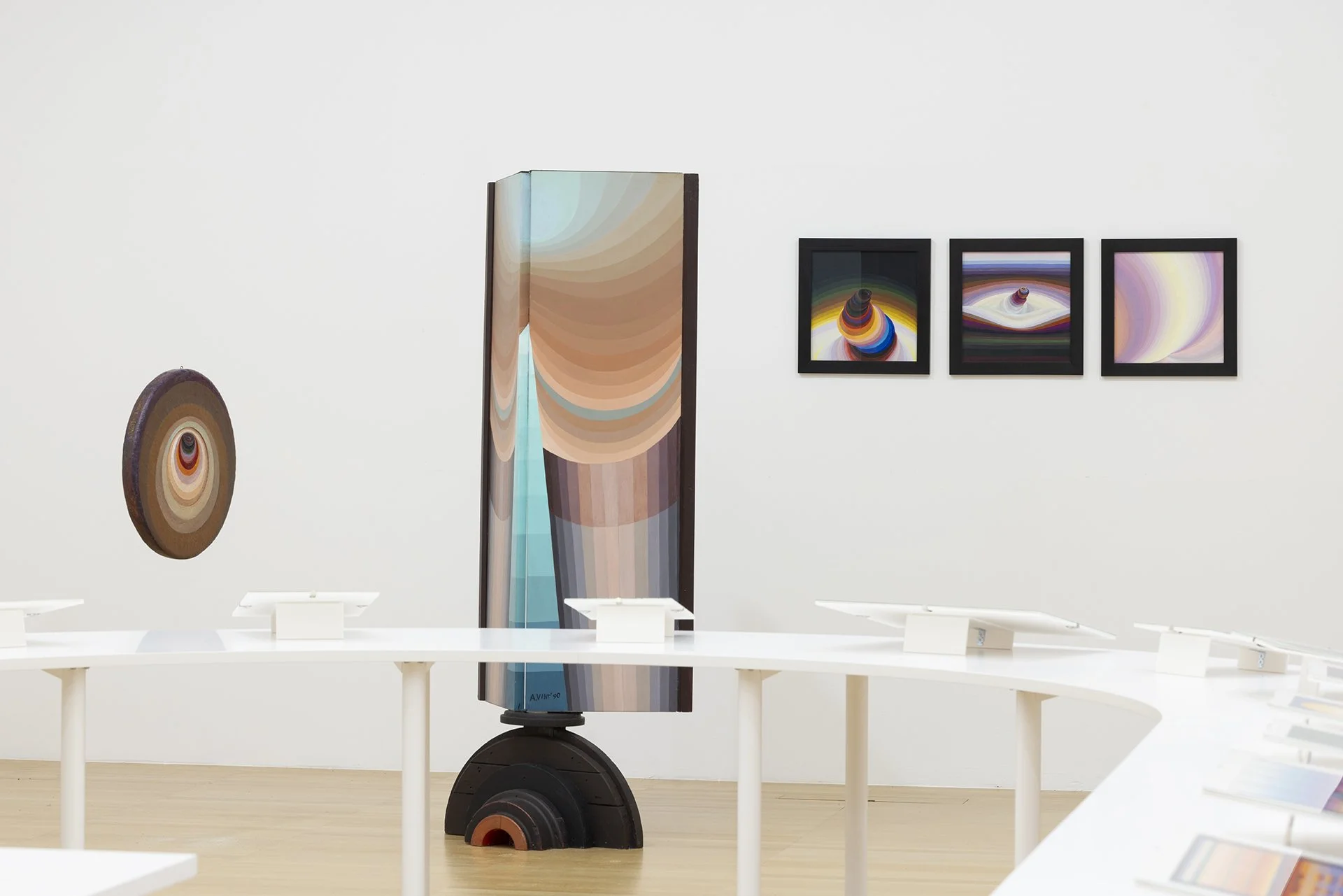
The 36th Ljubljana Biennale of Graphic Arts, Museum of Modern Art (MG+), Aili Vint, Meeting place, 1990; Composition square by square, 1977. Photo: Jaka Babnik. MGLC Archive.“It is not only about presenting works but about creating environments that motivate the viewers to engage in different individual and social dynamics.”
CH: In the same essay, the claim that "generating communicative forms of meaning is key to future discoveries" is striking — it positions art as genuinely epistemological, not just expressive. What would it look like to test or develop that claim? Are there examples where artistic research has demonstrably opened new knowledge?
CM: For me the exhibition format, and the potential development of public art projects, of new forms of entering the social fabric with art (the playgrounds, the schools, the civic activities) are embodied ways of regenerating the social contract. We need the production of alliances, no single institution or group can make it alone this time. We really need a call that engages with very many different players to create a different order than the one that is imposed upon us right now.
CH: Drawing on Flusser's analysis of alphabetic thinking — his claim that the logic of reading and the historical timeline are analogous, and that we're now in a "revolution of the second order” — "The Complex Answer" suggests exhibition-making must move beyond the logic of the book. What does it mean, in practice, for an exhibition to genuinely abandon that logic rather than simply declare the format obsolete while continuing to reproduce it?
CM: Oh! I would need a very long text to enter into the details of it. But the entanglement between public dialogic life and exhibition-making possesses an enormous potential for social transformation. It is not only about presenting works but about creating environments that motivate the viewers to engage in different individual and social dynamics. The exhibition format is great. It is not demanding and yet it is. It is a great system to activate little by little different modus operandi in our behaviors through the way we sense and perceive. But we need as well to create new places and institutions able to activate all this, and that is not easy.
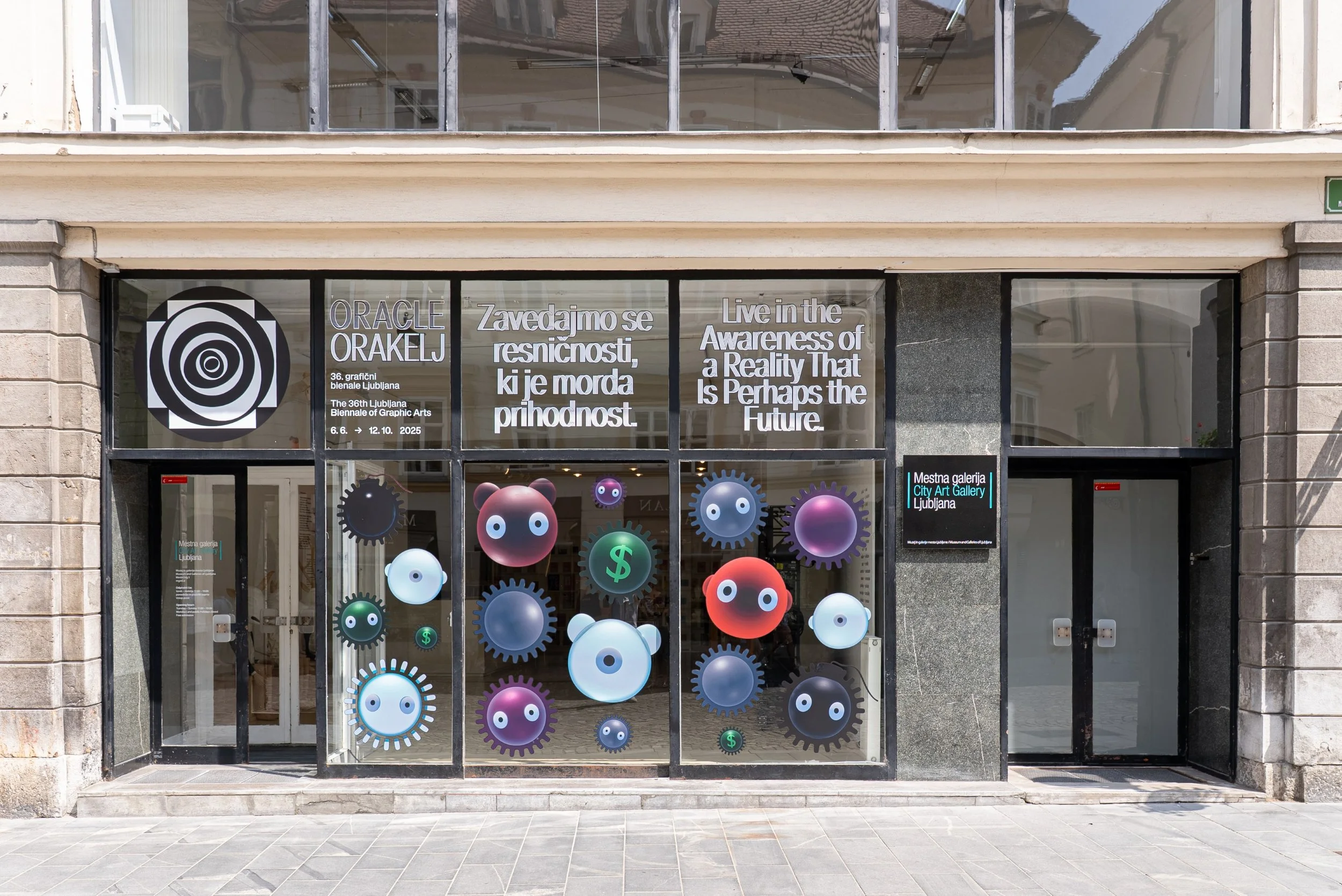
The 36th Ljubljana Biennale of Graphic Arts, City Art Gallery Ljubljana with a detail from Ingo Niermann and Mayte Gómez Molina, Hieroglyphs of the Monadic Age, 2025. Photo: Gregor Gobec. MGLC Archive.CH: You propose working with youth and children as one method for "un-forming" inherited structures. What have you observed from these collaborations that couldn't be learned from working with adults already socialized into art-world expectations?
CM: YES! But I would say that I truly enjoy just engaging with all kinds of audiences, no matter their age or background. I think we need to develop a passion for people, as they are.
This conversation is part of Axis of Culture's inaugural issue on perception, interpretation, and intelligence across disciplines — exploring how cultural institutions might sustain openness and attentiveness.Chennie Huang is the Founder of Axis of Culture.